If you’ve seen this year’s P99 CONF agenda, you know that the stars have aligned nicely. In just two half days, from anywhere you like, you can learn from 60+ outstanding speakers – all sharing performance insights from a broad range of perspectives. Distributed databases, Rust, Go, Java, C++, Wasm, AI/ML, eBPF, Linux kernel & more– it’s all on the agenda.
Watch P99 CONF talks on demand
As we were posting the speaker bios, we were reminded that our speakers have amassed a rather impressive list of publications, including quite a few books. This blog highlights a handful of those books, which we highly encourage you to read.
AI Engineering: Building Applications with Foundation Models
 By Chip Huyen
Amazon | O’Reilly
This book discusses AI engineering: the process of building applications with readily available foundation models. It starts with an overview of AI engineering, explaining how it differs from traditional ML engineering and discussing the new AI stack. The more AI is used, the more opportunities there are for catastrophic failures, and therefore, the more important evaluation becomes. This book discusses different approaches to evaluating open-ended models, including the rapidly growing AI-as-a-judge approach.
AI application developers will discover how to navigate the AI landscape, including models, datasets, evaluation benchmarks, and the seemingly infinite number of use cases and application patterns. You’ll learn a framework for developing an AI application, starting with simple techniques and progressing toward more sophisticated methods, and discover how to efficiently deploy these applications.
- Understand what AI engineering is and how it differs from traditional machine learning engineering
- Learn the process for developing an AI application, the challenges at each step, and approaches to address them
- Explore various model adaptation techniques, including prompt engineering, RAG, fine-tuning, agents, and dataset engineering, and understand how and why they work
- Examine the bottlenecks for latency and cost when serving foundation models and learn how to overcome them
- Choose the right model, dataset, evaluation benchmarks, and metrics for your needs
Chip is presenting “Making LLMs Run Fast.”
 Logic for Programmers
 Logic for Programmers
By Hillel Wayne
Leanpub (includes a 25% discount, courtesy of Hillel)
Logic is the most important branch of math to software engineering. Knowing logic opens up a vast world of development techniques, from everyday tricks of the trade to exotic tools for cracking impossible tasks.
This book teaches the basics of logic and nine special logic-powered techniques: property testing, decision tables, constraint solving, and more. Over 40 exercises are provided to help readers master the material. No prior math background required!
Hillel is presenting “Designing Low-Latency Systems with TLA+”
Designing Machine Learning Systems: An Iterative Process for Production-Ready Applications
 By Chip Huyen
Amazon | O’Reilly
Machine learning systems are both complex and unique. Complex because they consist of many different components and involve many different stakeholders. Unique because they’re data dependent, with data varying wildly from one use case to the next. In this book, you’ll learn a holistic approach to designing ML systems that are reliable, scalable, maintainable, and adaptive to changing environments and business requirements.
Chip considers each design decision – such as how to process and create training data, which features to use, how often to retrain models, and what to monitor – in the context of how it can help your system as a whole achieve its objectives. The iterative framework in this book uses actual case studies backed by ample references.
This book will help you tackle scenarios such as:
- Engineering data and choosing the right metrics to solve a business problem
- Automating the process for continually developing, evaluating, deploying, and updating models
- Developing a monitoring system to quickly detect and address issues your models might encounter in production
- Architecting an ML platform that serves across use cases
- Developing responsible ML systems
Chip is presenting “Making LLMs Run Fast.”
Think Distributed Systems
 By Dominik Tornow
Amazon | Manning (use code P99CONF25 for 40% off or bundle for 50%)
All modern software is distributed. Let’s say that again—all modern software is distributed. Whether you’re building mobile utilities, microservices, or massive cloud native enterprise applications, creating efficient distributed systems requires you to think differently about failure, performance, network services, resource usage, latency, and much more. This clearly-written book guides you into the mindset you’ll need to design, develop, and deploy scalable and reliable distributed systems.
In Think Distributed Systems you’ll find a beautifully illustrated collection of mental models for:
- Correctness, scalability, and reliability
- Failure tolerance, detection, and mitigation
- Message processing
- Partitioning and replication
- Consensus
Dominik is presenting “Squashing the Heisenbug with Deterministic Simulation Testing.”
Bonus: Dominik just announced a new book: Systems Engineering for Agentic Applications.
Database Performance at Scale

By Felipe Cardeneti Mendes (P99 CONF speaker), Piotr Sarna (P99 CONF speaker), Pavel Emelyanov, and Cynthia Dunlop
Amazon | ScyllaDB (free book)
Discover critical considerations and best practices for improving database performance based on what has worked, and failed, across thousands of teams and use cases in the field. This book provides practical guidance for understanding the database-related opportunities, trade-offs, and traps you might encounter while trying to optimize data-intensive applications for high throughput and low latency.
Whether you’re building a new system from the ground up or trying to optimize an existing use case for increased demand, this book covers the essentials. The ultimate goal of the book is to help you discover new ways to optimize database performance for your team’s specific use cases, requirements, and expectations.
- Understand often overlooked factors that impact database performance at scale
- Recognize data-related performance and scalability challenges associated with your project
- Select a database architecture that’s suited to your workloads, use cases, and requirements
- Avoid common mistakes that could impede your long-term agility and growth
- Jumpstart teamwide adoption of best practices for optimizing database performance at scale
Felipe is presenting “Fast and Deterministic Full Table Scans at Scale.”
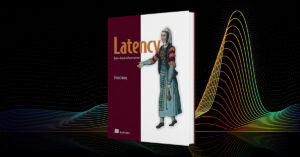
Latency: Reduce Delay in Software Systems
 By Pekka Enberg
Amazon | Manning (use code P99CONF25 for 40% off or bundle for 50%)
Slow responses can kill good software. Whether it’s recovering microseconds lost while routing messages on a server or speeding up page loads that keep users waiting, finding and fixing latency can be a frustrating part of your work as a developer. This one-of-a-kind book shows you how to spot, understand, and respond to latency wherever it appears in your applications and infrastructure.
This book balances theory with practical implementations, turning academic research into useful techniques you can apply to your projects. In Latency you’ll learn:
- What latency is—and what it is not
- How to model and measure latency
- Organizing your application data for low latency
- Making your code run faster
- Hiding latency when you can’t reduce it
Pekka delivered the “Patterns of Low Latency” keynote at P99 CONF 2024; his co-founder Glauber Costa is presenting “Why We’re Rewriting SQLite in Rust” this year.
Writing for Developers: Blogs That Get Read
 By Piotr Sarna and Cynthia Dunlop
Amazon | Manning (use code P99CONF25 for 40% off or bundle for 50%)
Think how many times you’ve read an engineering blog that’s sparked a new idea, demystified a technology, or saved you from going down a disastrous path. That’s the power of a well-crafted technical article! This practical guide shows you how to create content your fellow developers will love to read and share.
Writing for Developers introduces seven popular “patterns” for modern engineering blogs—such as “The Bug Hunt”, “We Rewrote It in X”, and “How We Built It”—and helps you match these patterns with your ideas. The book covers the entire writing process, from brainstorming, planning, and revising, to promoting your blog and leveraging it into further opportunities. You’ll learn through detailed examples, methodical strategies, and a “punk rock DIY attitude!”:
- Pinpoint topics that make intriguing posts
- Apply popular blog post design patterns
- Rapidly plan, draft, and optimize blog posts
- Make your content clearer and more convincing to technical readers
- Tap AI for revision while avoiding misuses and abuses
- Increase the impact of all your technical communications
This book features lots of P99 CONF speakers (past, present, and [hopefully] future)
PostgreSQL Query Optimization: The Ultimate Guide to Building Efficient Queries

By Henrietta Dombrovskaya (P99 CONF speaker), Boris Novikov, Anna Bailliekova
Amazon | O’Reilly
This book helps you write queries that perform fast and deliver results on time. You will learn that query optimization is not a dark art practiced by a small, secretive cabal of sorcerers. Any motivated professional can learn to write efficient queries from the get-go and capably optimize existing queries. You will learn to look at the process of writing a query from the database engine’s point of view, and know how to think like the database optimizer.
- Identify optimization goals in OLTP and OLAP systems
- Read and understand PostgreSQL execution plans
- Distinguish between short queries and long queries
- Choose the right optimization technique for each query type
- Identify indexes that will improve query performance
- Optimize full table scans
- Avoid the pitfalls of object-relational mapping systems
- Optimize the entire application rather than just database queries
Henrietta is presenting “Uplevel pgBadger: The Potential of Postgres for Log Analysis.”